IDIOMA
 English
 Español
 عربى
عربى

Why Are Fish-Scale Metal Tiles Becoming an Attractive Choice for Architectural Roofing Projects?
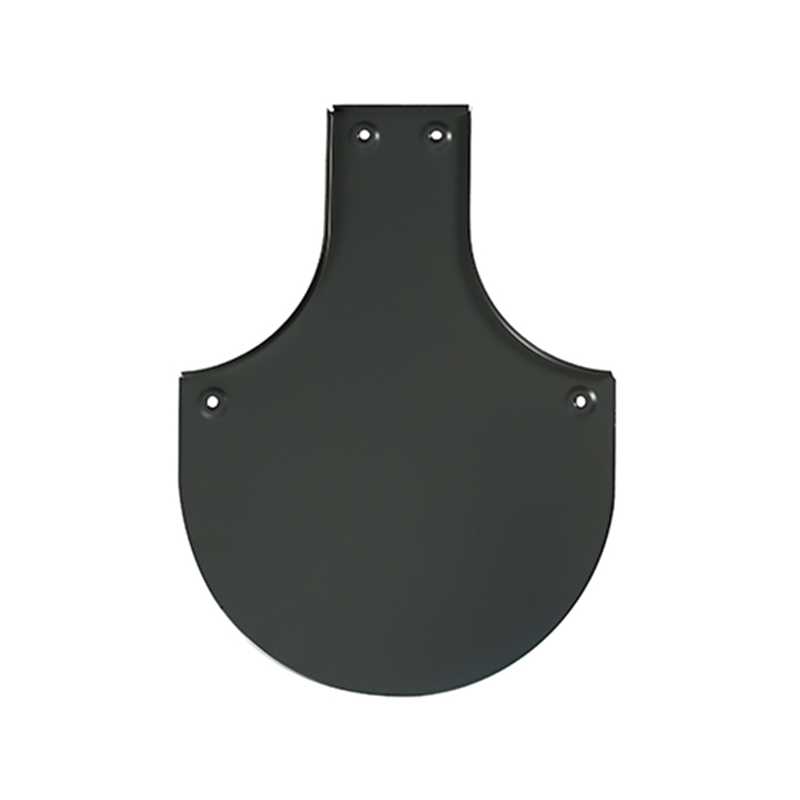
Fish-Scale Metal Tiles are becoming an increasingly interesting option for architectural projects that require a distinctive roof appearance while maintaining the practical characteristics of modern metal building materials. Inspired by the overlapping appearance of fish scales, these metal tiles create a repeated curved or rounded pattern across the roof surface. Compared with conventional flat panels, corrugated sheets, or standard metal tiles, the fish-scale profile provides stronger visual texture and can become an important architectural feature rather than simply functioning as a protective roof covering.
For professional buyers, architects, contractors, developers, and project procurement teams, the selection of Fish-Scale Metal Tiles should not be based only on the decorative effect. Material selection, panel dimensions, forming accuracy, surface treatment, connection method, drainage design, roof slope, accessories, and installation requirements all influence the final performance of the system. A professional supplier should therefore be able to provide more than individual tiles and should understand how the product will be incorporated into the complete roofing structure.
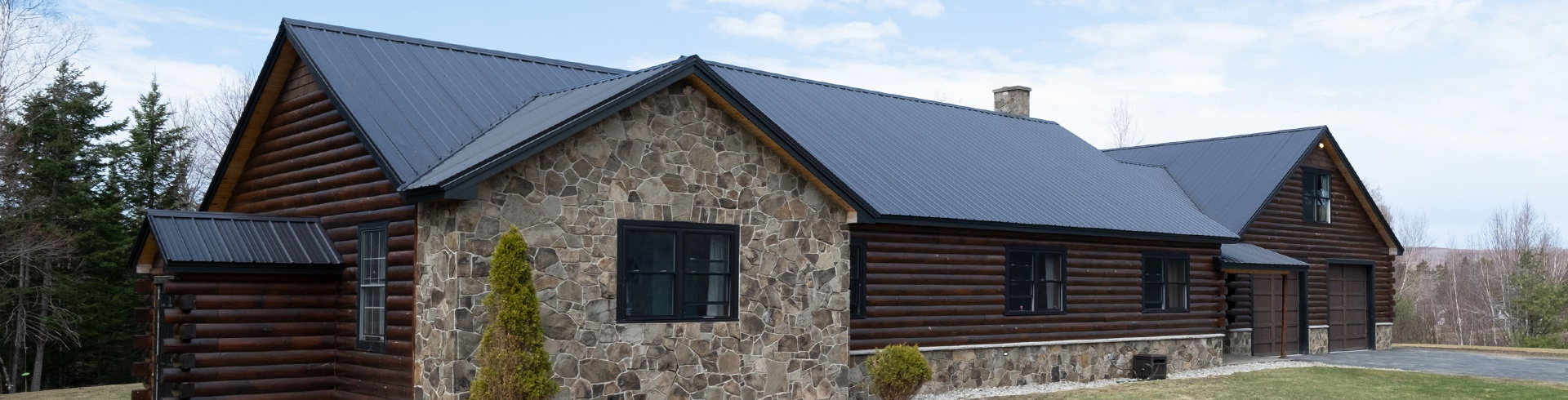
Fish-scale metal roofing is particularly suitable for buildings where the roof has strong visual importance. Applications may include cultural buildings, tourism facilities, hotels, restaurants, commercial developments, public buildings, modern residential projects, garden architecture, architectural renovation projects, and themed structures. The appearance can be adapted through different colors, metallic finishes, tile sizes, and installation patterns.
Suzhou Donghong Metal Materials Technology Co., Ltd. specializes in the research, development, manufacturing, processing, sales, and installation of metal roofing and wall materials. Located in Taicang, Suzhou, a beautiful city known as the “Hometown of German Enterprises,” the company is adjacent to Shanghai, an important national steel structure industry base, while Nantong, a city renowned for its construction industry, is located across the river. This location provides convenient transportation and logistics conditions for metal roofing and wall-material projects.
The company’s product portfolio includes standing seam aluminum-magnesium-manganese roofing systems, metal curtain wall systems, flat interlocking roofing and cladding systems, antique-style metal glazed tile systems, external wall insulation systems, and metal concealed-lock barrel tile roofing systems. This experience in different types of metal building-envelope products provides a useful foundation for developing and supplying decorative roofing solutions such as fish-scale systems.
What Gives Fish-Scale Metal Tiles Their Distinctive Appearance?
The defining characteristic of Fish-Scale Metal Tiles is the repeated overlapping pattern. Each module is arranged with neighboring modules to create a layered appearance similar to fish scales. When viewed from a distance, individual modules combine into a continuous decorative surface. When viewed closely, the edges and overlaps create subtle shadow lines that make the roof more visually dynamic.
This appearance can be adjusted through the dimensions of the tile modules. Smaller modules create a denser texture, while larger modules can provide a simpler and more contemporary effect. The installation direction and layout can also influence the visual rhythm of the roof.
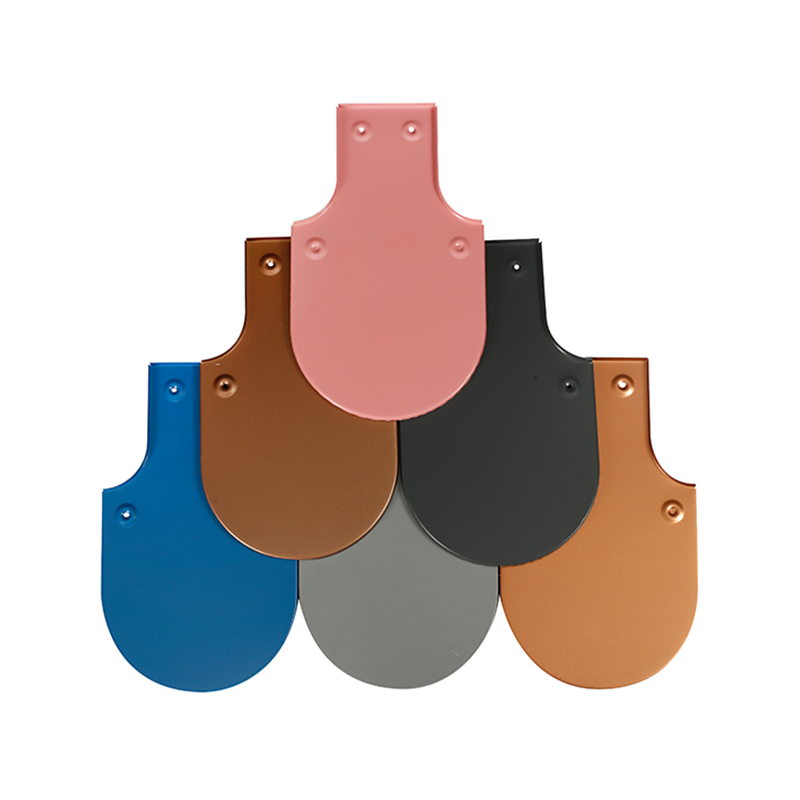
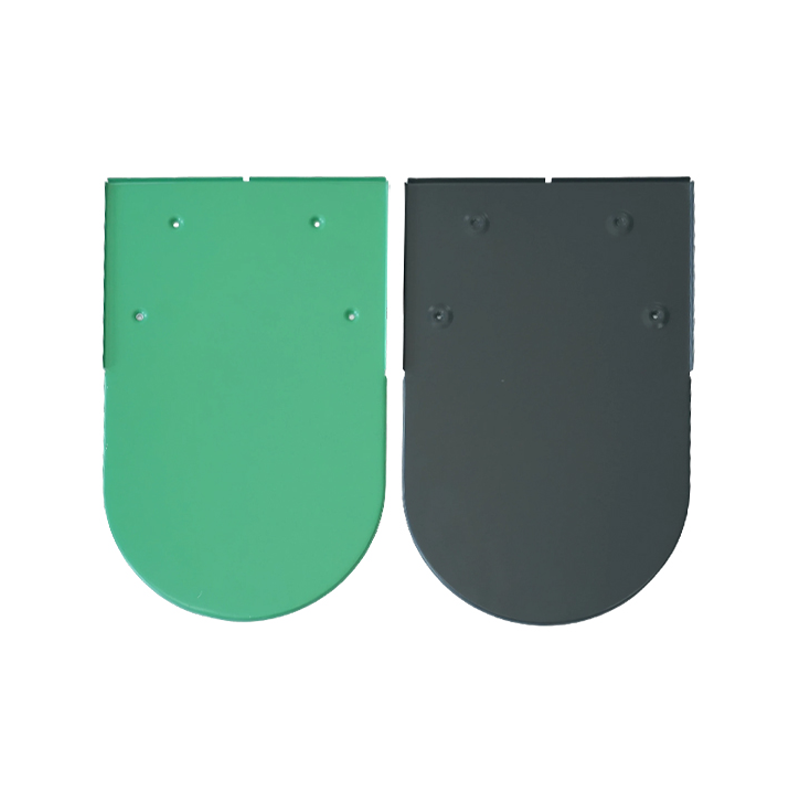
Surface treatment is another important factor. A metallic finish can emphasize the shape of each module, while matte coatings may provide a softer architectural appearance. Different colors can also be selected to coordinate with wall cladding, curtain walls, windows, stone, concrete, or other building materials.
| Product consideration | Options or characteristics | Influence on project |
|---|---|---|
| Tile profile | Rounded, curved, or customized fish-scale shape | Defines the architectural style |
| Module size | Small, medium, or large format | Controls visual density |
| Material | Aluminum, steel, aluminum alloys, etc. | Influences weight and durability |
| Thickness | Project-specific specification | Affects rigidity and handling |
| Finish | Painted, coated, metallic, matte, etc. | Determines surface appearance |
| Color | Standard or customized colors | Supports architectural coordination |
| Overlap | Specific overlapping configuration | Influences visual rhythm and drainage |
| Installation | Fixed according to the complete roofing system | Determines construction efficiency |
How Can Fish-Scale Metal Tiles Be Adapted to Different Building Styles?
One of the strengths of the fish-scale profile is its ability to combine traditional visual inspiration with modern metal manufacturing. A classic dark-colored finish can complement traditional architecture, while a simple metallic or neutral finish can be incorporated into contemporary buildings.
The product can also be used selectively. For example, a building may use Fish-Scale Metal Tiles across the main roof while using another metal roofing system for secondary roof areas. Alternatively, fish-scale modules can be concentrated around entrance structures, decorative roof sections, towers, pavilions, or other architectural focal points.
This flexibility allows architects and project owners to use the profile strategically rather than treating it as an all-or-nothing roofing solution.
Why Does the Roof Slope Matter?
Roof slope should be considered before selecting and installing any decorative metal roofing system. The slope influences water drainage, overlap requirements, detailing, and the suitability of the installation configuration.
Professional buyers should therefore provide the manufacturer with the roof slope and basic roof geometry during the quotation stage. This allows the supplier to evaluate whether the selected Fish-Scale Metal Tiles are appropriate for the proposed application and whether additional drainage or flashing components are required.
How Can Fish Scale Wall Tile Create a More Distinctive and Coordinated Building Façade?
The fish-scale concept is not limited to roofing. Fish Scale Wall Tile can be used as an exterior wall-cladding solution when a project requires a more textured and visually distinctive façade. Instead of presenting a completely flat wall surface, the overlapping modules create repeated patterns and subtle changes in depth. As sunlight moves across the façade, these elements can produce changing light-and-shadow effects.
For commercial buildings, hotels, restaurants, cultural facilities, tourism developments, themed architecture, and high-end residential projects, this visual effect can become an important part of the building’s identity. A carefully selected fish-scale wall system can help a relatively simple building envelope gain more visual depth without relying on complicated structural shapes.
For professional procurement teams, however, appearance should be considered together with the complete façade assembly. Fish Scale Wall Tile must be coordinated with the supporting substructure, fixing system, insulation, moisture management, corners, openings, and other façade details.
Suzhou Donghong Metal Materials Technology Co., Ltd. has experience in metal wall materials as well as roofing systems. Its product range includes metal curtain wall systems, external wall insulation systems, and flat interlocking roofing and cladding systems. This broader product capability allows different exterior-material requirements to be considered together when developing a project solution.
What Are the Main Design Advantages of Fish Scale Wall Tile?
The most obvious advantage is visual differentiation. Conventional flat wall panels can provide a clean appearance, but Fish Scale Wall Tile introduces a repeating three-dimensional pattern. The overlap between modules can create shadow lines that change according to the angle of sunlight and the position of the viewer.
Another advantage is design flexibility. By changing module size, color, finish, and arrangement, designers can create different façade effects. A smaller module may produce a highly textured appearance, while larger modules can create a more restrained visual language.
The orientation of the pattern can also be coordinated with building geometry. Repeated rows may emphasize the horizontal direction, while carefully designed vertical arrangements can contribute to a stronger sense of height.
| Façade consideration | What should be evaluated? | Why it matters |
|---|---|---|
| Module size | Width and height of each tile | Determines visual density |
| Profile | Curvature and edge shape | Controls light and shadow |
| Material | Aluminum, steel, alloy, etc. | Influences weight and durability |
| Surface finish | Coating, texture, and gloss | Affects architectural appearance |
| Color | Standard or customized | Coordinates with other materials |
| Joint pattern | Regular or staggered arrangement | Determines façade rhythm |
| Substructure | Supporting frame and fixing system | Provides installation stability |
| Insulation | Thermal requirements | Supports building-envelope performance |
| Drainage | Moisture-management details | Helps protect the wall assembly |
How Does Light and Shadow Affect a Fish-Scale Façade?
The layered structure of Fish Scale Wall Tile naturally creates areas of highlight and shadow. This can make the façade appear different under morning, midday, and afternoon light. Artificial lighting can also emphasize the profile at night, which can be particularly useful for hotels, restaurants, cultural buildings, and commercial projects.
The depth of the profile and the overlap between modules should therefore be considered during design. A deeper profile may produce a stronger visual effect, while a shallower profile can provide a more subtle texture.
Can Fish Scale Wall Tile Be Combined with Other Exterior Materials?
Yes. Fish-scale wall systems can be combined with glass curtain walls, stone, concrete, conventional metal panels, aluminum curtain walls, and other exterior materials. The contrast between smooth and textured surfaces can help define different architectural areas.
For example, Fish Scale Wall Tile could be used around an entrance or feature wall while a simpler metal curtain wall system is used on the main façade. Alternatively, the fish-scale pattern can extend across an entire façade for a stronger architectural statement.
Why Is System Coordination Important?
A wall panel is only one part of the building envelope. The supporting structure, insulation, drainage, fasteners, flashing, corners, and openings all influence the final performance. Coordinating these components during the design stage can reduce field modification and improve construction efficiency.
What Should Professional Buyers Check Before Ordering Fish-Scale Metal Roofing Systems?
For large architectural projects, purchasing Fish-Scale Metal Tiles should begin with a detailed technical and commercial evaluation. Because decorative metal systems involve both appearance and functional requirements, buyers should compare suppliers according to more than the initial unit price.
A reliable procurement process should cover material specifications, module dimensions, profile geometry, surface treatment, quality consistency, production capacity, customization capability, packaging, logistics, installation requirements, and technical support . These factors can directly influence the final cost and construction schedule.
This is particularly important when ordering large quantities. If a project requires thousands of modules, even a small dimensional difference between batches may become visible across the completed roof. Consistent manufacturing is therefore an important requirement for architectural applications.
Suzhou Donghong Metal Materials Technology Co., Ltd. integrates research and development, manufacturing, processing, sales, and installation of metal roofing and wall materials. Its location in Taicang, Suzhou, provides convenient logistics access to Shanghai and the wider Yangtze River Delta region. For customers requiring coordinated roofing and wall systems, the company’s broader product portfolio can also provide additional options for matching different areas of the building envelope.
Which Technical Specifications Should Buyers Confirm?
Before requesting a final quotation, buyers should establish a complete product specification. The product name alone is not sufficient because different manufacturers may use different dimensions, profiles, materials, and installation methods for similar products.
The specification should clearly define the material, thickness, module dimensions, profile geometry, surface finish, color, installation method, and accessory requirements. For roofing projects, roof slope and drainage conditions should also be provided.
| Procurement item | Information to confirm |
|---|---|
| Product | Fish-Scale Metal Tiles |
| Wall product | Fish Scale Wall Tile |
| Material | Aluminum, steel, alloy, or specified metal |
| Thickness | Required material thickness |
| Module size | Width, height, and coverage dimensions |
| Profile | Fish-scale geometry and forming details |
| Finish | Coating, color, gloss, and texture |
| Installation | Overlap and fixing configuration |
| Accessories | Ridge, edge, flashing, corner, and transition components |
| Quantity | Required coverage and number of modules |
| Packaging | Transportation and storage protection |
| Quality | Dimensional and surface requirements |
| Delivery | Production and logistics schedule |
How Can Customized Production Reduce Installation Problems?
Architectural projects frequently include different roof slopes, corners, openings, transitions, curved sections, and decorative areas. Standard modules may not always provide the most efficient arrangement.
Customized production allows the manufacturer to consider the building geometry before manufacturing. Panel dimensions and quantities can then be coordinated with the architectural drawings. This may reduce unnecessary cutting and field modifications while helping installers maintain the intended pattern.
For international orders, early customization is particularly useful because correcting dimensions after shipment can be difficult and expensive. Buyers should therefore provide drawings and technical requirements before confirming the production order.
Why Is Manufacturing Consistency Important for Fish-Scale Products?
The repeated pattern is one of the main visual characteristics of fish-scale systems. If one batch has slightly different dimensions, curvature, or surface color from another batch, the difference may become visible after installation.
Manufacturers should therefore control the forming process, material thickness, surface finish, dimensions, and packaging. Quality inspection should be performed throughout production rather than only after the complete order has been manufactured.
For large projects, buyers can also discuss whether production batches should be managed consistently and whether samples or approval pieces can be provided before mass production.
How Should Buyers Evaluate the Total Project Value?
The total project value should include material cost, accessories, transportation, packaging, installation labor, material utilization, maintenance considerations, and potential replacement costs.
A supplier offering a lower unit price may not necessarily provide the lowest total cost if the products require extensive field modification or arrive with transportation damage. Conversely, a manufacturer with stronger customization and quality-control capabilities may provide greater value even if the initial unit price is not the lowest.
Professional procurement should therefore focus on consistent quality, suitable technical specifications, reliable delivery, and complete project support rather than price alone.
FAQ About Fish-Scale Metal Tiles and Fish Scale Wall Tile
What are Fish-Scale Metal Tiles?
Fish-Scale Metal Tiles are decorative metal roofing modules designed with overlapping shapes that resemble fish scales. They can create a distinctive textured appearance while using modern metal materials and manufacturing processes.
What is Fish Scale Wall Tile?
Fish Scale Wall Tile is a decorative metal wall-cladding product inspired by the shape and overlapping appearance of fish scales. It can provide a textured façade and create changing light-and-shadow effects across the exterior surface.
Where can Fish-Scale Metal Tiles be used?
They can be considered for commercial buildings, hotels, restaurants, public facilities, cultural buildings, tourism projects, residential developments, garden structures, renovation projects, and other architectural applications where a distinctive roof appearance is desired.
Can Fish Scale Wall Tile be used on modern buildings?
Yes. The fish-scale pattern can be adapted to contemporary architecture through modern colors, metallic finishes, larger modules, simplified profiles, and coordinated use with glass, stone, concrete, and other metal façade systems.
What materials can be used for fish-scale metal products?
Possible materials include aluminum, steel, aluminum-based alloys, and other suitable architectural metals. The appropriate material depends on the project environment, structural requirements, desired appearance, durability expectations, and budget.
Can Fish-Scale Metal Tiles be customized?
Depending on the manufacturer’s capabilities, customization may include material, thickness, module size, profile, color, coating, finish, and installation configuration. Buyers should provide technical drawings for project-specific customization.
Can Fish-Scale Metal Tiles and Fish Scale Wall Tile be used together?
Yes. Using coordinated roof and wall products can create a unified architectural appearance. However, the roofing and wall systems should still be designed separately according to their respective structural, drainage, weather-exposure, and installation requirements.
What should buyers confirm before placing a large order?
Buyers should confirm the material, thickness, module dimensions, profile, surface finish, color, installation method, accessories, packaging, quality requirements, production capacity, customization capabilities, and delivery schedule. Project drawings should ideally be provided before mass production.
Why work with a professional metal roofing and wall-material manufacturer?
A professional manufacturer can help coordinate material selection, product development, manufacturing, processing, packaging, and installation requirements. Suzhou Donghong Metal Materials Technology Co., Ltd. specializes in the research, development, manufacturing, processing, sales, and installation of metal roofing and wall materials, with a product portfolio covering multiple roofing, cladding, curtain wall, and insulation systems. This integrated capability can provide useful support for projects requiring coordinated architectural metal solutions.

 DESCARGAR